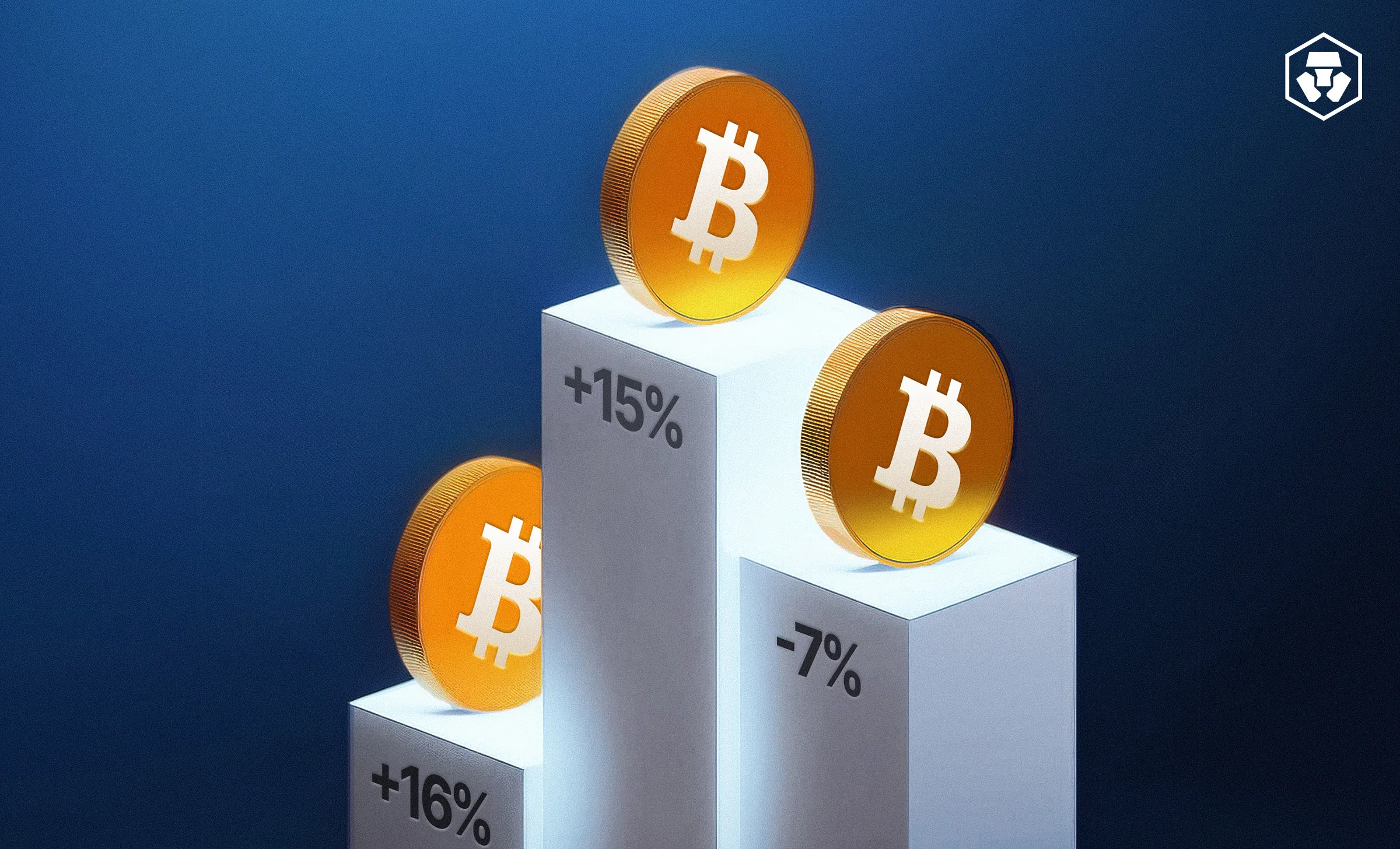
The Bitcoin halving is a deterministic supply shock occurring every 210,000 blocks, effectively reducing miner block rewards by 50% to maintain a fixed supply cap of 21 million units. Historical data from the 2012, 2016, 2020, and 2024 events demonstrates that the inflation rate drops from roughly 1.7% to 0.85% post-event. By examining a bitcoin halving chart, investors observe that the Stock-to-Flow ratio increases significantly, theoretically exerting upward pressure on asset prices as the issuance of new supply fails to keep pace with sustained demand growth.
The primary function of a chart tracking these events is to visualize the reduction in daily sell-side pressure originating from miners who must liquidate rewards to cover operational expenses. In the 2012 cycle, the daily issuance dropped from 7,200 BTC to 3,600 BTC, forcing the market to adjust to a thinner order book almost instantaneously. Since miners possess fixed electricity and hardware costs, the halving forces an immediate efficiency stress test where only those with energy costs below the new equilibrium price can remain solvent.
Historical patterns indicate that total network hashrate often undergoes a recalibration phase within 90 days after each event as older hardware becomes economically unviable at the lower reward tier.
When miners turn off machines, the network difficulty adjusts downwards to maintain the target 10-minute block interval, a mechanism that serves as a self-correcting feedback loop for the entire ecosystem. Analyzing the hashrate distribution alongside historical price movements reveals that the 12 to 18-month window following each event frequently correlates with the transition from a bear market accumulation phase to a full-blown bull run. This cyclicality relies heavily on the assumption that demand remains inelastic or increases, yet the market has matured significantly since the 2016 epoch, when Bitcoin trade volume was largely confined to niche exchanges.
| Cycle Year | Pre-Halving Reward | Post-Halving Reward | Approx. Supply Reduction |
| 2012 | 50 BTC | 25 BTC | 50% |
| 2016 | 25 BTC | 12.5 BTC | 50% |
| 2020 | 12.5 BTC | 6.25 BTC | 50% |
| 2024 | 6.25 BTC | 3.125 BTC | 50% |
The introduction of regulated financial vehicles like spot ETFs has fundamentally altered the demand profile compared to the 2020 cycle, as institutional capital flows now represent a larger portion of daily turnover. These entities often operate on long-term accumulation mandates, which changes the velocity of money during periods when daily mining supply is cut in half. Traders observing these metrics must reconcile the pre-programmed scarcity of the protocol with the influx of capital that does not follow the traditional four-year periodicity of the network.
-
Mining revenue impact is measurable via the change in the Bitcoin Price-to-Energy cost ratio immediately following the block reward drop.
-
Market liquidity often compresses in the weeks preceding the event as participants anticipate higher volatility based on previous 15% to 20% drawdown patterns.
-
The increasing percentage of circulating supply held in long-term cold storage reduces the available float, amplifying the impact of supply shocks during periods of high demand.
The correlation between supply-side constriction and price action is not a static guarantee, as macroeconomic factors like the M2 money supply in major economies often dwarf the impact of a 3.125 BTC reduction. During the 2020 event, global liquidity expanded rapidly to address economic stagnation, which acted as a massive tailwind that arguably exceeded the impact of the issuance drop itself. Relying solely on the timing of past cycles ignores the reality that Bitcoin now moves in lockstep with global risk-on assets, particularly during periods of high inflation or shifting central bank interest rate policies.
Relying on historical charts without factoring in the current global liquidity index may result in an incomplete assessment of the asset's trajectory in the current financial landscape.
Diversifying analytical methods by incorporating on-chain data, such as the percentage of addresses in profit and exchange reserve balances, provides a more comprehensive view than a single chart. For instance, in the 2024 post-halving environment, the reduction in daily output was roughly 450 BTC, a figure that is often absorbed by a single institutional buyer within one or two trading days. This shift suggests that while the protocol-level scarcity is undeniable, the impact on price discovery is increasingly mediated by large-scale institutional balance sheet management rather than retail sentiment alone.
Sophisticated market participants now look at the cost-basis of long-term holders compared to the marginal cost of production for miners to determine the true floor of the market. If the spot price dips significantly below the production cost for the majority of the network, history suggests that miners will hold onto their supply rather than sell, further tightening the available circulating supply. This feedback mechanism demonstrates that supply and demand are not just simple arithmetic, but a complex series of choices made by miners who monitor the profitability threshold at every 10-minute interval.
Final analysis requires observing the delta between supply issuance and trade volume on high-liquidity order books, as this gap often dictates the magnitude of the next major price shift. While the reduction in supply is a constant, the behavior of participants is a variable that evolves with every cycle as more capital enters the ecosystem and the network becomes more integrated into global finance. Integrating this data allows for a more nuanced approach than simple cyclical expectations, helping to filter out the noise that often leads to irrational decision-making during the transition between the pre-event anticipation phase and the post-event supply shock reality.